
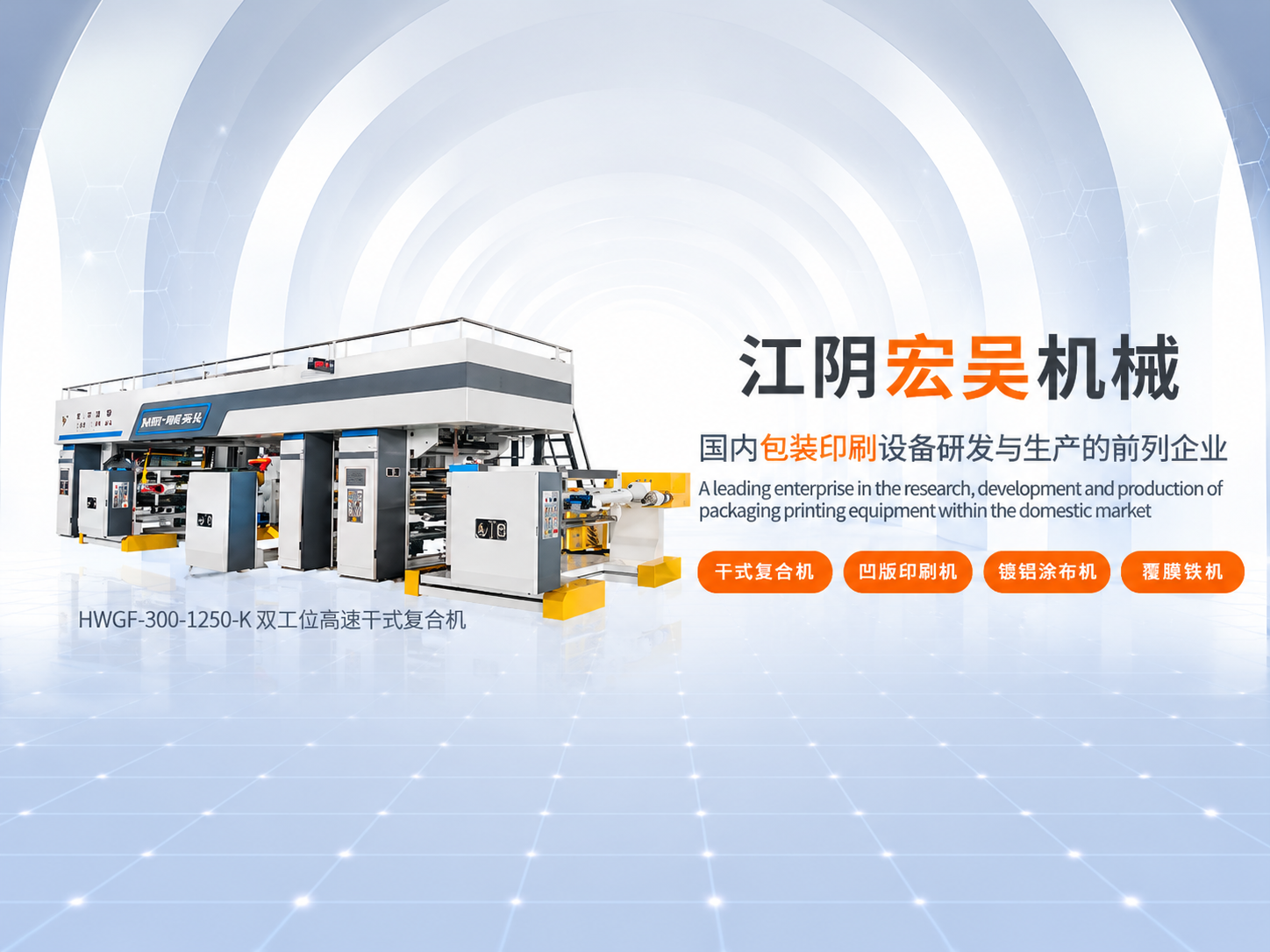
Under the ‘Dual Carbon’ policy framework, flexible packaging enterprises face the dual pressures of energy consumption control and production capacity enhancement. Traditional dry laminators suffer from significant heat loss in their drying ovens, with hot air being directly vented to the outside, resulting in substantial energy wastage; simultaneously, imbalances in the control of drying temperature and air flow can lead to solvent residue and material deformation during drying, which constrains equipment speed and drives up overall production costs due to rework and scrap. HGF-300 series of energy-efficient dry laminators from Hongwu is equipped with an optimised and upgraded hot-air recirculation system. By harnessing energy-saving potential across multiple aspects—including heat recovery, cabinet insulation, airflow design and intelligent interlocking—the machines strike a balance between reducing energy consumption, ensuring product quality and maximising production efficiency.
This series comprises standard single-station, reinforced single-station and dual-station models, with a processing width of 600–1,250 mm. It is compatible with a variety of substrates, including PET, OPP, aluminium foil, nylon and PE, whilst the dual-station version supports automatic roll splicing and changing without halting production, thereby maximising effective production time.
High-efficiency hot-air recirculation significantly reduces heating energy consumption
The equipment’s drying oven is divided into three independent temperature zones, each of which allows for independent adjustment of the hot-air recirculation ratio, adjustable within a range of 0–50 per cent. Part of the hot air that has already undergone heat exchange within the oven is recovered and recirculated back to the heater for reuse, reducing the need to continuously heat fresh, cold air and significantly lowering the energy consumption of the electric heating system. Unlike traditional equipment, which exhausts all hot air directly, this system reuses waste heat, thereby reducing thermal energy wastage at source.
High-strength insulated chamber design minimises heat loss
The oven features a thickened layer of high-performance rock wool insulation, fully encased in stainless steel both inside and out. The chamber is meticulously sealed to minimise heat loss to the outside, preventing unnecessary energy consumption caused by heat dissipation through the outer casing. Even during prolonged continuous operation, the internal temperature remains stable, reducing the need for the heater to cycle on and off frequently to compensate for heat loss, thereby further lowering the overall energy consumption of the unit.
Optimised airflow structure ensures uniform drying and supports high-speed production
The oven utilises a slotted flat-nozzle air knife to direct hot air onto the surface of the film material, ensuring uniform air distribution across the entire width. Whilst ensuring thorough evaporation of adhesive solvents, the process can be completed at relatively lower drying temperatures, enabling low-temperature, high-airflow drying. This not only conserves thermal energy but also prevents the film and aluminium foil substrates from stretching, wrinkling or deforming due to high-temperature exposure.
Stable and consistent drying results minimise issues such as solvent residue, incomplete drying and thermal deformation of materials, thereby reducing the frequency of downtime for adjustments and rework/rewinding, and laying a solid foundation for high-speed operation.
Intelligent system coordination enables dynamic matching of energy consumption and speed
The equipment’s temperature control, fans and main unit speed are intelligently coordinated; the system automatically adjusts airflow and heating output power according to the production line speed. It does not operate at full power during low-speed production, whilst ensuring sufficient drying capacity during high-speed operation. The equipment’s actual power consumption during operation is significantly lower than its total rated power, thereby avoiding the energy waste associated with ‘overkill’ operation. The fans utilise variable-frequency control to regulate airflow on demand, eliminating the need for constant full-load operation and reducing fan power consumption.
Energy savings without compromising production capacity; enhanced overall production efficiency
Energy efficiency does not equate to reduced production capacity; this series achieves a maximum mechanical speed of 300 m/min. The drying system is stable and reliable; combined with the machine’s constant tension control and automatic web guiding, it ensures consistent product quality even during high-speed operation. The dual-station models enable roll changes without stopping the machine, eliminating downtime associated with roll changes and improving the equipment’s effective utilisation rate. Whilst energy consumption is reduced, the defect rate is also lowered, and both electricity consumption and material wastage per unit of product decrease simultaneously, helping enterprises to reduce the overall production cost per unit.
The HWGF‑300 series of energy-efficient dry laminators deeply integrates hot-air recirculation energy-saving technology with actual production processes. Not only does it save electricity and reduce energy consumption, but it also balances product quality and production efficiency, making it widely applicable to production scenarios such as food packaging, pharmaceutical packaging and high-barrier multilayer laminated films. In the future, Jiangyin Xinhongwu will continue to advance its energy-saving equipment technology, providing green and efficient laminating equipment solutions for flexible packaging enterprises.
About Under the ‘Dual Carbon’ policy framework, flexible packaging enterprises face the dual pressures of energy consumption control and production capacity enhancement. Traditional dry laminators suffer from significant heat loss in their drying ovens, with hot air being directly vented to the outside, resulting in substantial energy wastage; simultaneously, imbalances in the control of drying temperature and air flow can lead to solvent residue and material deformation during drying, which constrains equipment speed and drives up overall production costs due to rework and scrap. The HWGF-300 series of energy-efficient dry laminators from Jiangyin Xinhongwu is equipped with an optimised and upgraded hot-air recirculation system. By harnessing energy-saving potential across multiple aspects—including heat recovery, cabinet insulation, airflow design and intelligent interlocking—the machines strike a balance between reducing energy consumption, ensuring product quality and maximising production efficiency.
This series comprises standard single-station, reinforced single-station and dual-station models, with a processing width of 600–1,250 mm. It is compatible with a variety of substrates, including PET, OPP, aluminium foil, nylon and PE, whilst the dual-station version supports automatic roll splicing and changing without halting production, thereby maximising effective production time.
High-efficiency hot-air recirculation significantly reduces heating energy consumption
The equipment’s drying oven is divided into three independent temperature zones, each of which allows for independent adjustment of the hot-air recirculation ratio, adjustable within a range of 0–50 per cent. Part of the hot air that has already undergone heat exchange within the oven is recovered and recirculated back to the heater for reuse, reducing the need to continuously heat fresh, cold air and significantly lowering the energy consumption of the electric heating system. Unlike traditional equipment, which exhausts all hot air directly, this system reuses waste heat, thereby reducing thermal energy wastage at source.
High-strength insulated chamber design minimises heat loss
The oven chamber features a thickened layer of high-performance rock wool insulation, fully encased in stainless steel both inside and out. The chamber is meticulously sealed to minimise heat loss to the outside, preventing unnecessary energy consumption caused by heat dissipation through the outer casing. Even during prolonged continuous operation, the internal temperature remains stable, reducing the need for the heater to cycle on and off frequently to compensate for heat loss, thereby further lowering the overall energy consumption of the unit.
Optimised airflow structure ensures uniform drying and supports high-speed production
The oven utilises a slotted flat-nozzle air knife to direct hot air onto the surface of the film material, ensuring uniform air distribution across the entire width. Whilst ensuring thorough evaporation of adhesive solvents, the process can be completed at relatively lower drying temperatures, enabling low-temperature, high-airflow drying. This not only conserves thermal energy but also prevents the film and aluminium foil substrates from stretching, wrinkling or deforming due to high-temperature exposure.
Stable and consistent drying results minimise issues such as solvent residue, incomplete drying and thermal deformation of materials, thereby reducing the frequency of downtime for adjustments and rework/rewinding, and laying a solid foundation for high-speed operation.
Intelligent system coordination enables dynamic matching of energy consumption and speed
The equipment’s temperature control, fans and main unit speed are intelligently coordinated; the system automatically adjusts airflow and heating output power according to the production line speed. It does not operate at full power during low-speed production, whilst ensuring sufficient drying capacity during high-speed operation. The equipment’s actual power consumption during operation is significantly lower than its total rated power, thereby avoiding the energy waste associated with ‘overkill’ operation. The fans utilise variable-frequency control to regulate airflow on demand, eliminating the need for constant full-load operation and reducing fan power consumption.
Energy savings without compromising production capacity; enhanced overall production efficiency
Energy efficiency does not equate to reduced production capacity; this series achieves a maximum mechanical speed of 300 m/min. The drying system is stable and reliable; combined with the machine’s constant tension control and automatic web guiding, it ensures consistent product quality even during high-speed operation. The dual-station models enable roll changes without stopping the machine, eliminating downtime associated with roll changes and improving the equipment’s effective utilisation rate. Whilst energy consumption is reduced, the defect rate is also lowered, and both electricity consumption and material wastage per unit of product decrease simultaneously, helping enterprises to reduce the overall production cost per unit.
HGF‑300 series of energy-efficient dry laminators deeply integrates hot-air recirculation energy-saving technology with actual production processes. Not only does it save electricity and reduce energy consumption, but it also balances product quality and production efficiency, making it widely applicable to production scenarios such as food packaging, pharmaceutical packaging and high-barrier multilayer laminated films. In the future, Hongwu will continue to advance its energy-saving equipment technology, providing green and efficient laminating equipment solutions for flexible packaging enterprises.
About Jiangyin City New Hongwu Automation Equipment Co.,Ltd.
Jiangyin City New Hongwu Automation Equipment Co.,Ltd. , based in Jiangyin, Jiangsu, specialises in the research, development and manufacture of high-speed dry laminators. The company provides single-station, dual-station and customised turnkey equipment solutions to domestic flexible packaging manufacturers.