
As the flexible packaging industry sets ever-higher standards for product quality and production efficiency, the lamination process must not only ensure effective material bonding but also maintain batch consistency, production stability and material utilisation.
In actual production, fluctuations in tension, web misalignment, uneven coating and unstable lamination pressure can all lead to issues such as creases, air bubbles and misalignment in the finished product, thereby increasing rework and material wastage. How to improve lamination quality through enhanced equipment control precision has become a key focus for packaging companies seeking to optimise their production.
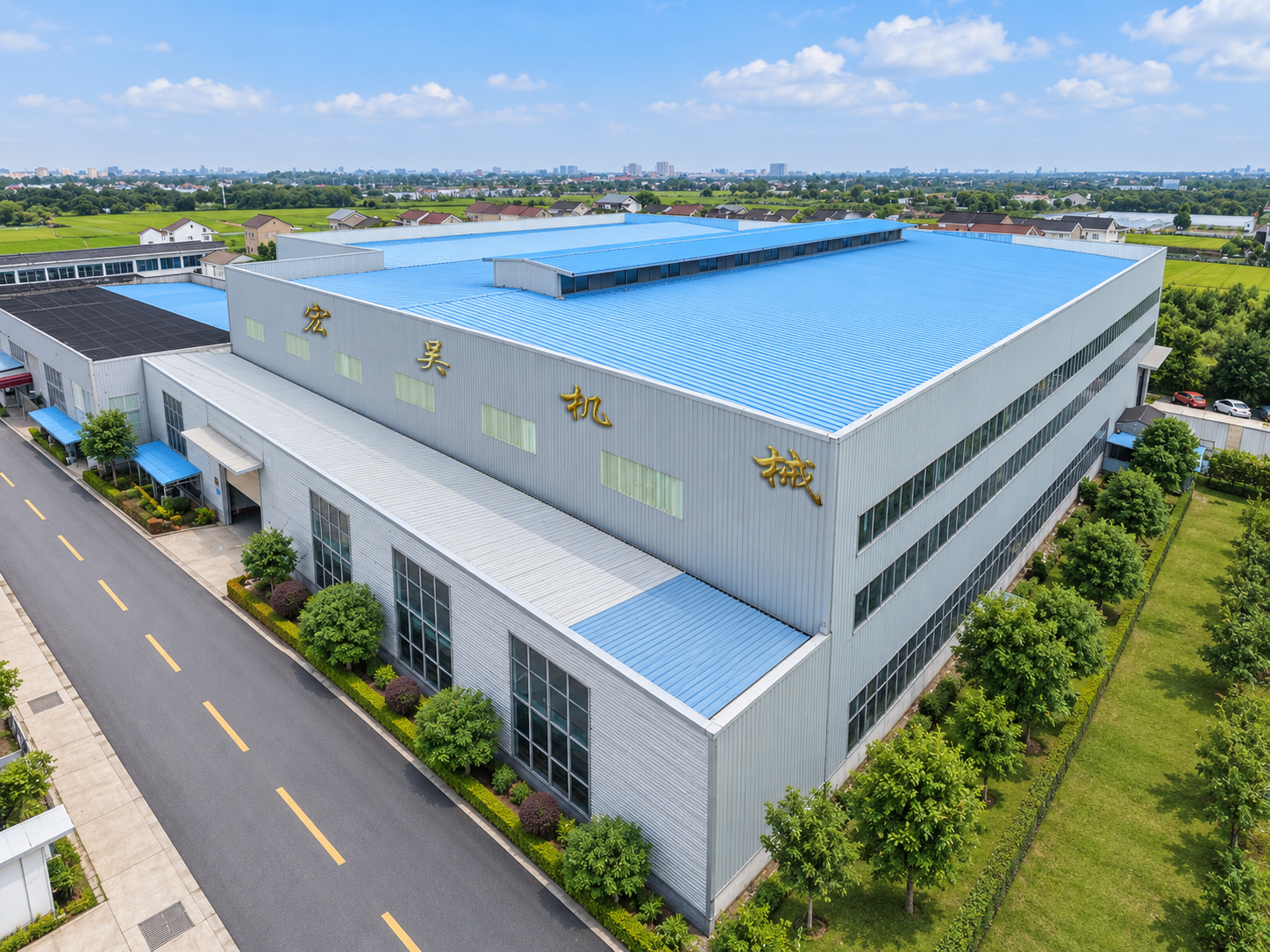
Focusing on the requirements of the flexible packaging lamination process, Hongwu Machinery continuously optimises servo drives, tension control and coating mechanisms. Through coordinated control across multiple stages, it helps companies improve production stability and reduce the risk of lamination defects.
I. Servo synchronous drive ensures stable material feed
Dry lamination production involves multiple stages, including unwinding, coating, lamination and rewinding; the speed synchronisation between these units directly affects the running condition of the web.
The equipment utilises a servo drive control system to coordinate the relevant drive units, thereby reducing issues such as material stretching and slackening caused by speed discrepancies. This ensures the web runs more smoothly, providing a stable foundation for continuous lamination production.
II. Closed-loop Tension Control to Minimise Laminating Deviations
Different materials vary in thickness, elasticity and ductility, and thus have different requirements for tension control.
Through a tension detection and feedback mechanism, the equipment monitors the web’s running status in real time and adjusts the relevant actuators according to set parameters, ensuring appropriate tension matching during the unwinding, laminating and rewinding stages.
Stable tension control helps to minimise material wrinkling, stretching and slackening, improves the running conditions of multi-layer substrates, and enhances the stability of the lamination process.
III. Precise Coating Control to Improve Lamination Quality
The uniformity of adhesive coating directly affects the lamination strength and the appearance of the finished product.
The equipment utilises an independently driven coating structure, combined with a metered coating method using an anilox roller. Coating parameters can be adjusted according to different materials and product structures, helping to control adhesive consumption and improve coating uniformity.
In conjunction with the pressure and temperature adjustments of the three-roll laminating mechanism, this provides appropriate laminating conditions for different materials, helping to enhance the bonding effect of the finished product.
IV. In-line Automatic Web Guiding to Reduce the Risk of Material Drift
During the continuous lamination of multi-layer materials, lateral displacement of the web may result in misalignment, affecting the appearance of the finished product and material utilisation.
The equipment is fitted with an in-line automatic web guiding system, which uses photoelectric sensors to detect the position of the material edges and adjusts the feed direction based on feedback signals, thereby reducing lateral drift and ensuring the material maintains a relatively stable position as it enters the lamination unit.
V. Multi-stage Coordination to Reduce Rework and Waste
Lamination quality is not determined by a single technology, but is the result of the combined action of the drive, tension control, coating, web guiding and lamination mechanisms.
Through the coordinated operation of multiple control technologies, the equipment helps to minimise material feed irregularities and lamination fluctuations during production, improving product flatness and batch consistency, thereby reducing the risk of rework and material wastage caused by unstable equipment operation.
Stable Equipment Performance to Support Consistent, High-Quality Mass Production
For packaging enterprises, truly valuable equipment must not only fulfil production tasks but also maintain stable performance over the long term.
Hongwu Machinery specialises in the manufacture of flexible packaging laminating equipment. By continuously optimising servo drives, tension control and lamination processes—guided by actual production requirements—we help customers enhance lamination quality and production stability, providing reliable support for high-efficiency, low-waste flexible packaging production.